
Applications
Aluminum coil for Roofing
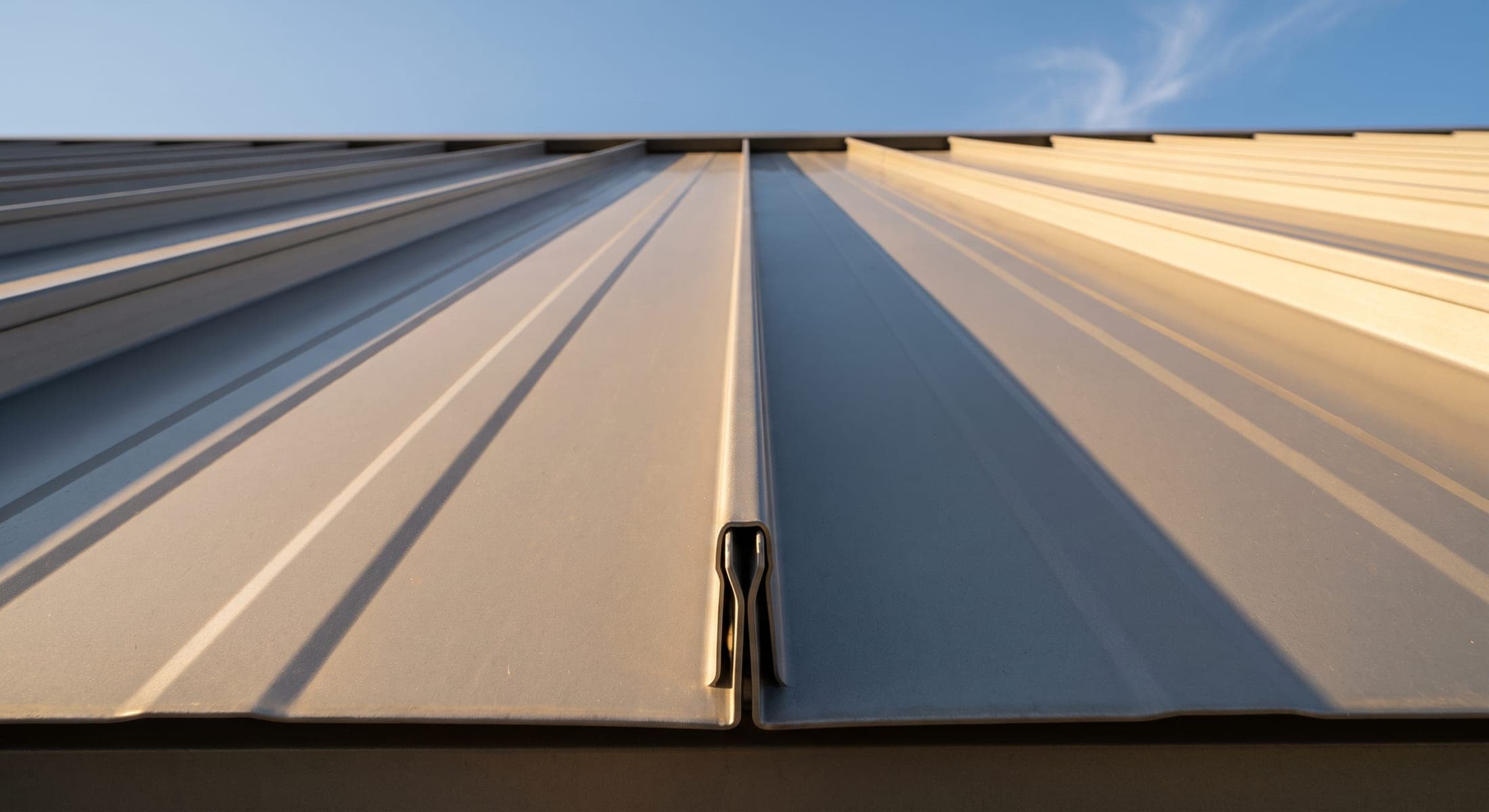
Roofing uses standing seam & panel. Long-term UV and weather exposure; PVDF for premium or coastal projects, HDPE for general inland roofing.
Recommended starting specification
- Coil form
- Standing seam & panel
- Recommended coating
- PVDF, HDPE
Guidance, not a fixed datasheet: confirm per order.
Requirements
Standing seam and panel roofing runs in long, largely flat spans, and any waviness in the coil telegraphs straight through as oil-canning once the panel is up.
- Not a structural failure: the roof still sheds water, but oil-canning is the most common complaint on a metal roof: visible waviness across the pans under low sun or raking light.
- What makes it worse: thinner gauge, wider flat pans, and looser flatness tolerance all make oil-canning worse; ribs and striations in the panel profile help hide it but don't fix bad feed stock.
Coating grade determines how the roof looks in year fifteen, not year one.
- Cost-first coating choice: roofing sits under constant UV and weather for the building's life, so a coating chosen for upfront cost over long-term retention chalks and fades unevenly, worse on sun-facing slopes than shaded ones.
- Repair mismatch: years later, any patch or repair panel visibly mismatches the original run, because gloss and color have already drifted apart.
Long runs also need to move. Panels expand and contract with temperature across the length of a run, so standing seam systems use floating clips rather than fixed fasteners, and panel width and clip spacing get chosen with that movement in mind, not just for looks.
Choosing between HDPE and PVDF
General inland roofing
HDPE
The standard choice for general inland roofing, holding up well under normal UV exposure at moderate cost.
View HDPE coatingPremium or coastal roofing
PVDF
Worth the upgrade for premium projects or coastal sites, where long-term color and gloss retention outperform HDPE over the roof's service life.
View PVDF coatingHow it's formed
Coil is roll-formed into standing seam or exposed-fastener panel profiles, either in a shop or with portable roll-formers on-site for long continuous runs without transverse seams.
What comes with your order
Material certificates accompany every batch. Test reports and ASTM/EN references are available on request.
Frequently asked questions
- What causes oil-canning and how is it controlled?
- Oil-canning comes from waviness in the flat coil that shows up as visible ripples once it's roll-formed into wide, flat panel pans. Tighter flatness tolerance, heavier gauge, narrower pan width, and added ribs or striations all reduce it, though no flat metal roof is completely immune under raking light.
- When should we specify PVDF over HDPE for roofing?
- HDPE is the standard choice for general inland roofing and holds up well under normal UV exposure. PVDF is worth the upgrade for premium projects or coastal sites, where its long-term color and gloss retention outperform HDPE over the roof's service life.
- Does panel width affect oil-canning risk?
- Yes. Wider flat pans amplify any waviness in the coil, since there's more flat area for the eye to read as rippled. Narrower panels, added ribs, or striated profiles all reduce visible oil-canning for the same coil flatness and gauge.
- How does roofing coil handle thermal expansion over long runs?
- Standing seam panels are installed with floating clips rather than fixed fasteners, so the panel can expand and contract along its length without buckling or pulling loose. Panel length and clip spacing are planned around expected temperature swings for the site.
- What gauge is typical for standing seam roofing?
- Gauge is set by panel width, seam spacing, and local wind or snow load rather than one standard number. Wider pans or higher load requirements call for heavier gauge to control both structural performance and oil-canning risk.