
Products / Coil
Stucco-Embossed Aluminum Coil
A repeating texture rolled into the surface during production, mill-finish or coated.
Recommended starting specification
- Alloys
- 1xxx, 3xxx, 5xxx
- Thickness
- Same range as mill-finish coil
- Width
- Up to 1650 mm mill-finish, 1350 mm coated
Guidance, not a fixed datasheet: confirm per order.
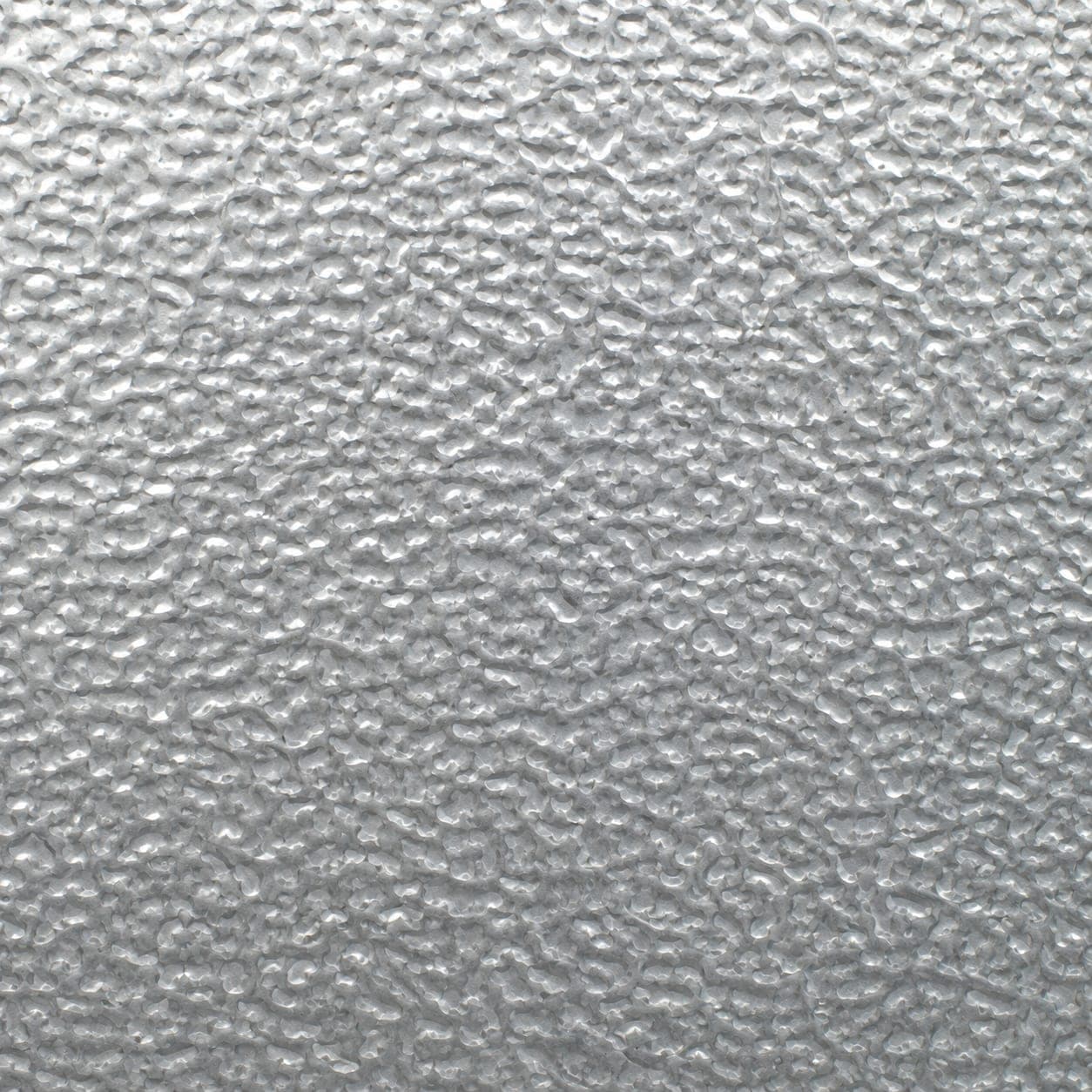
Embossing adds stiffness, letting a lighter gauge resist denting and oil-canning.
It hides handling and scuff marks, and the matte diffuse surface reduces glare.
It also improves coating and adhesive grip for laminating.
Common uses: insulation jacketing, pipe cladding, appliance panels, roofing, cladding, and decorative work.
Requirements
Embossing is a stiffness tool as much as a surface finish.
- Dent and oil-canning resistance: the pattern rolled into the coil during production raises resistance enough that a lighter gauge can do a heavier gauge's job, which matters whenever the price gap between thicknesses decides the job.
- Flat versus stucco: specify flat mill-finish or coated sheet for pipe cladding, appliance panels, or insulation jacketing, and handling knocks and scuffs show immediately; specify stucco instead and the same marks disappear into the texture.
The matte, diffuse surface also cuts glare, which matters on roofing and cladding runs where a gloss flat panel reflects hard in direct sun.
- Laminated builds: such as insulation jacketing bonded to foam, grip adhesive better on an embossed surface than a flat one, so the emboss choice affects bond performance and not only appearance.
- Emboss depth or pattern on a coated finish: getting it wrong can throw off how evenly the coating lays down, so confirm the embossing spec before the coil goes to the coating line, not after.
How it's processed
The texture is rolled into the coil surface during production via embossing rolls, either on bare mill-finish coil or after coating, and can be paired with any of the standard alloy and gauge combinations.
Gauge to scale
Gauge is easy to specify and hard to picture. Compare it against a credit card.
0.60 mm is 1.3x thinner than a standard credit card (0.76 mm).
Request a quote at this gaugeWhat comes with your order
Material certificates accompany every batch. Test reports and ASTM/EN references are available on request.
Frequently asked questions
- Does embossing let me use a thinner gauge without losing dent resistance?
- Often yes. The embossed pattern stiffens the surface enough that a lighter gauge can match a heavier flat gauge's resistance to denting and oil-canning. Whether that trade-off works depends on the application's load and handling, so confirm the target gauge against the specific use case rather than assuming a fixed downgrade.
- Can stucco-embossed coil be coated, or is it mill-finish only?
- Both. Stucco-embossed coil is available mill-finish or coated in the same systems and colors as flat coil, at the same coated width limit of 1350 mm. The embossing is applied before or after coating depending on the production line, and either way still delivers the same stiffness and glare-reduction benefits.
- What applications actually need embossed texture instead of flat coil?
- Insulation jacketing, pipe cladding, appliance panels, roofing, cladding, and decorative panel work are the common uses, mainly where handling marks, glare, or adhesive bonding are practical concerns. Flat coil is usually the better choice where a smooth, reflective, or paintable show surface matters more than damage resistance.
- Does the emboss pattern affect how well the coil takes a laminate or adhesive?
- Yes, generally for the better. The textured surface gives adhesives more contact grip than a flat surface, which is why embossed coil is common in laminated builds like insulation jacketing. Confirm the intended lamination method at order time so the emboss depth matches the adhesive and substrate being used.
- Is stucco-embossed coil available in the same alloys and gauges as mill-finish?
- Yes. It uses the same 1xxx, 3xxx, and 5xxx alloy series and the same 0.20 to 2.00 mm thickness range as mill-finish coil, at widths up to 1650 mm mill-finish or 1350 mm coated. Alloy and temper are still confirmed per order based on the intended use.