
Products / Coil
Prepainted (Coated) Aluminum Coil
Coated coil in any RAL or custom color, across all coating systems.
Recommended starting specification
- Alloys
- Same base alloys and gauge range as mill-finish
- Coated width
- Up to 1350 mm (narrower than mill-finish max, set by coating line width)
- Color
- Any RAL or custom color, across all coating systems
- Coating sides
- One side, or two-side with primer
- Protective film
- Available
Guidance, not a fixed datasheet: confirm per order.
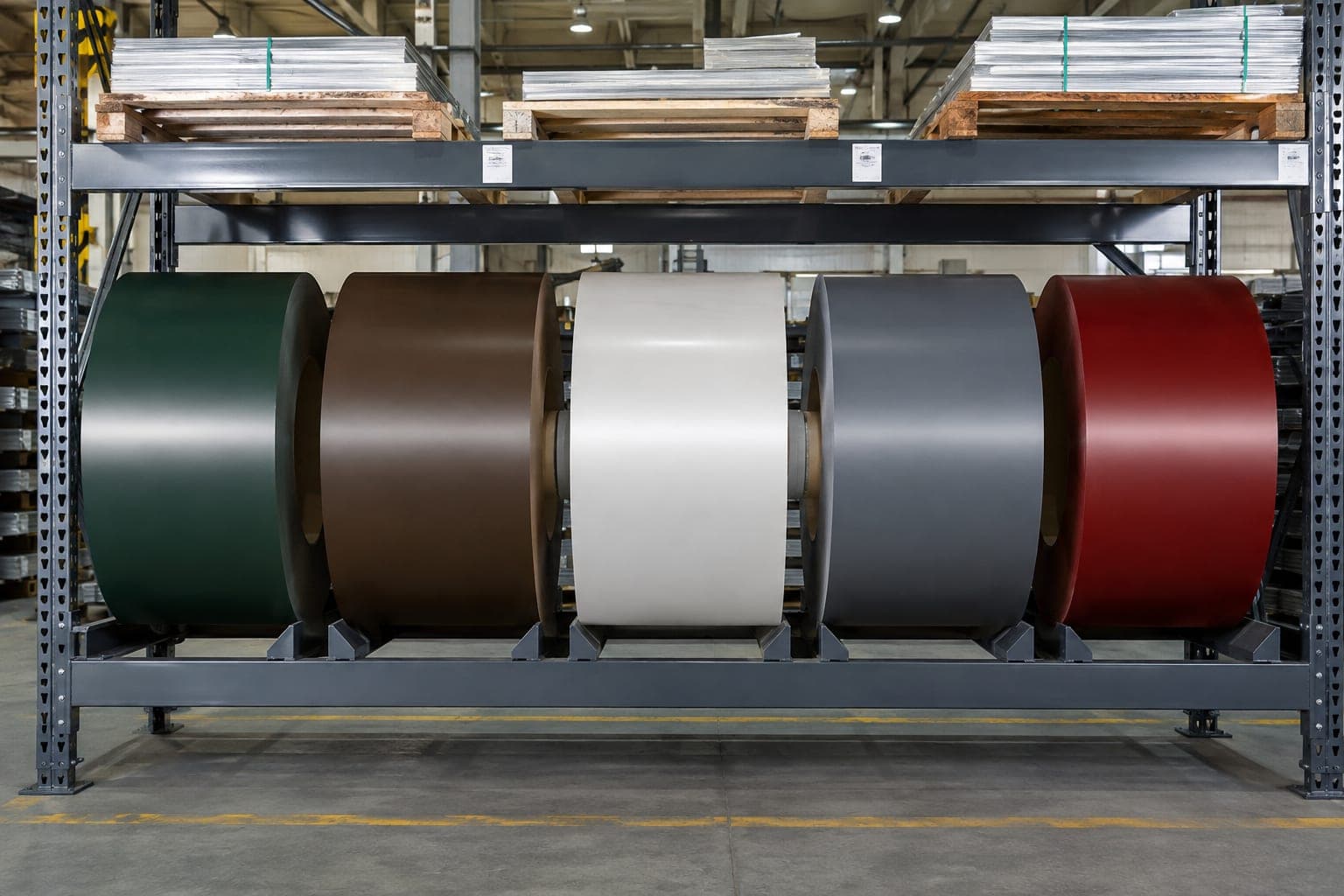
Prepainted steel coil is also available in the same coating systems and color range, on steel substrate, for applications where steel's cost or magnetic properties are preferred over aluminum.
Requirements
The coating system, not the color, is what determines service life: matching RAL or custom shades is straightforward, but PVDF, PUPA, HDPE, PE, and epoxy behave differently under UV, weathering, and mechanical wear.
- Picking on color alone: leaves the buyer with a finish that fades or chalks years before the substrate would fail.
- Coating width: tops out at 1350 mm, set by the coating line itself, narrower than the 1650 mm mill-finish max. A project that needs wider coated panels has to work that out at the design stage, not after the coil is ordered.
Coating on one side versus two sides with primer isn't cosmetic either.
- Both faces visible or exposed: such as shutter slats or certain cladding details, need two-side coverage or the unprotected back face corrodes or discolors faster than the front.
- Post-coating forming: has to respect the coating's flexibility: bending or roll-forming a panel tighter than the coating system tolerates cracks or crazes the paint film at the bend line, and that damage doesn't show up until the piece is installed.
Coating stack
Prepainted coil is several bonded layers, not one. Switch coating systems below to see how the stack changes.
How it's processed
Coated coil is typically roll-formed, bent, or stamped after coating, so forming severity has to stay within the coating system's flexibility rating; protective film is applied where handling or fabrication risks scratching the finish before installation.
What comes with your order
Material certificates accompany every batch. Test reports and ASTM/EN references are available on request.
Frequently asked questions
- What's the difference between PVDF, PE, and epoxy coatings for exterior use?
See the coatings pages for full detail; in short:
- PVDF: holds color and gloss the longest under UV and weathering, suited to long-term exterior cladding and facades.
- PE and HDPE: cost less but weather faster, workable for shorter-term or less exposed applications.
- Epoxy: is generally an interior or primer-layer coating rather than a weathering top coat.
- Can I get any RAL color, or only a fixed range?
- Any RAL or custom color is available across the coating systems offered. Custom colors typically involve a minimum order and lead time for color matching and line setup, so confirm both at order time if the shade isn't a standard RAL.
- Why is coated coil narrower than mill-finish coil?
- Coated width tops out at 1350 mm versus 1650 mm mill-finish, because the coating line itself sets the maximum width it can process, not the coil supply. If a project needs panels wider than 1350 mm, plan the panel layout around that limit before ordering.
- Should I order prepainted aluminum or prepainted steel?
That depends on cost and whether magnetic properties matter. Both are available in the same coating systems and colors.
- Steel: is generally cheaper for the same coated finish, and its magnetic properties suit certain fastening or handling methods aluminum can't.
- Aluminum: wins on weight and corrosion resistance without added coating protection.
- Does the coil come with protective film, and should I ask for it?
- Protective film is available and recommended whenever the coil will be handled, slit, formed, or transported before installation. It's a peel-off film that shields the finish from scuffing during fabrication and is removed once the piece is in place.